Yes, a Real Floor Can Go Down in One Day
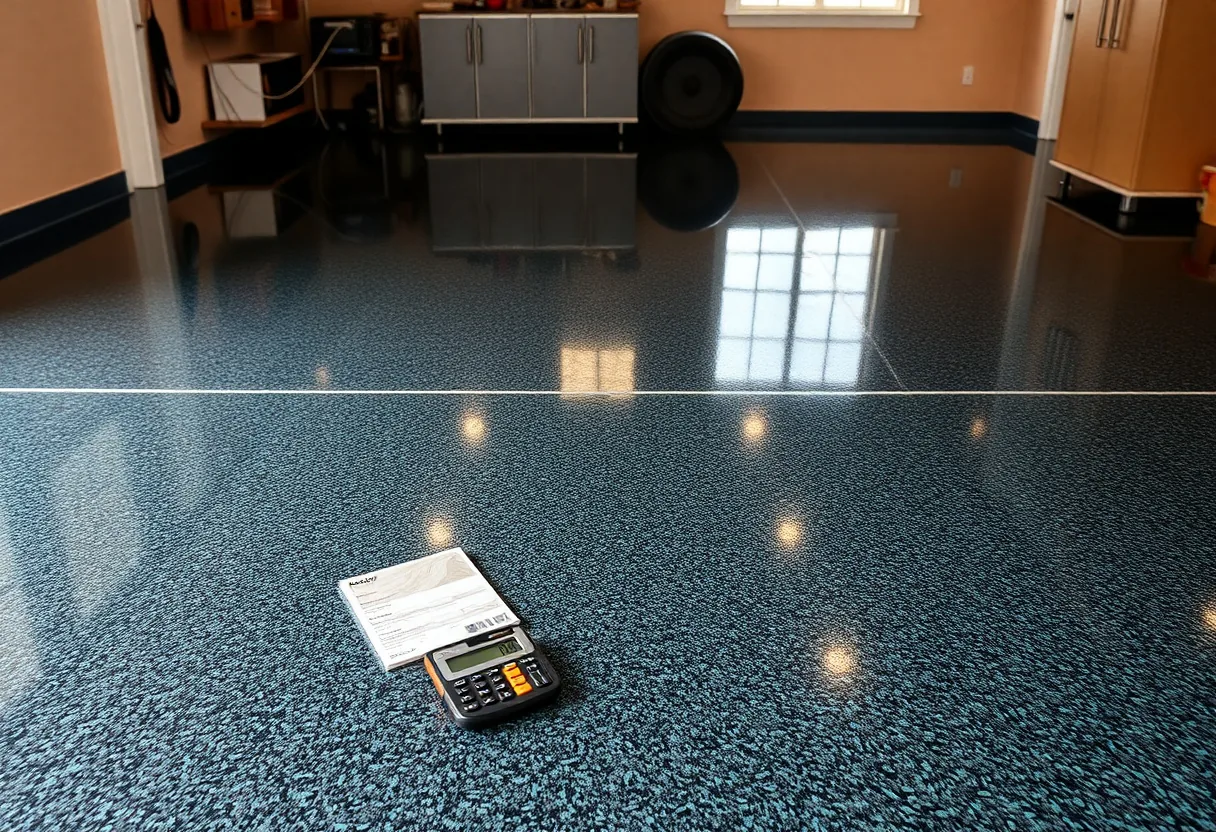
When homeowners hear that a professional floor coating can be ground, coated, flaked, and topcoated in a single day, most assume it is a corner-cut version of the real thing. It is not. A true one-day install is a material advantage, not a shortcut — it is only possible because polyaspartic chemistry cures far faster than the epoxy most people picture, and it does so in weather that would stall an epoxy crew for days.
That difference matters everywhere, but it matters more here. Louisiana throws heat, thick summer humidity, and the occasional cold snap at a curing floor. Our [polyaspartic 1-day systems](/services/polyaspartic-coatings/) are built to cure through all of it, which is what makes an honest morning-to-evening timeline realistic rather than a marketing promise.
What Makes a True 1-Day Install Possible
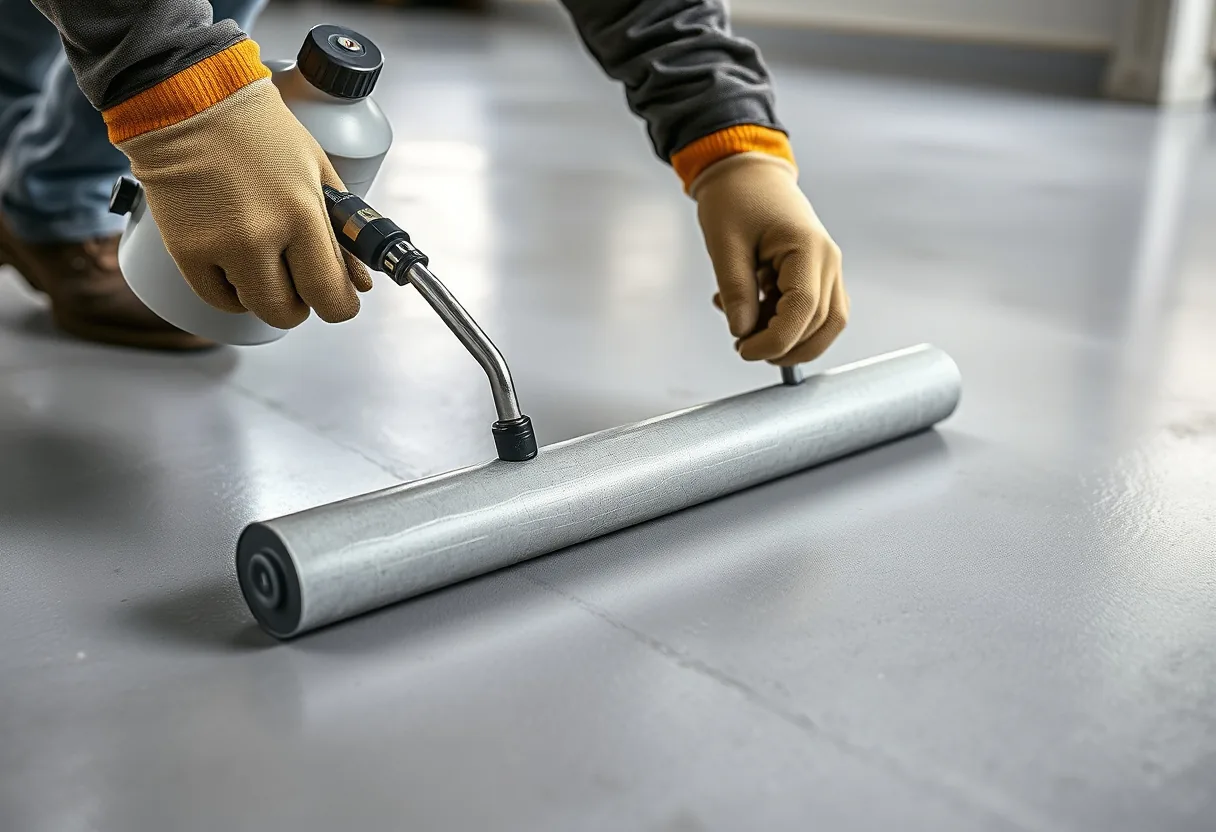
The whole thing comes down to cure speed and cure window. Polyaspartic is a fast-reacting coating: each coat firms up in a fraction of the time epoxy needs, so multiple coats can go down the same day instead of on separate visits. A crew can grind, lay a basecoat, broadcast flakes, and seal it with a clear topcoat before they pack up — all in daylight hours.
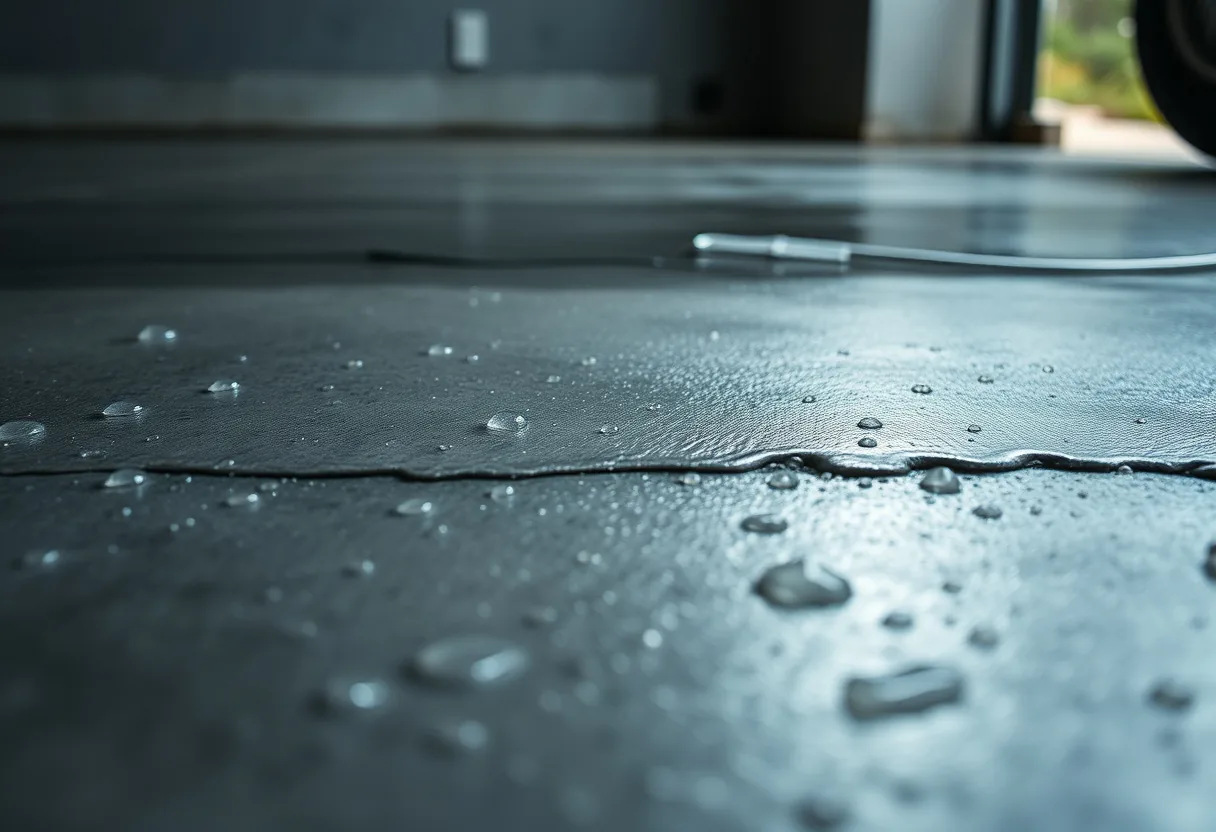
Just as important is the wide temperature and humidity cure window. Epoxy is fussy: it slows down or hazes in cold, and it can react poorly to moisture in the air. Polyaspartic is far more forgiving. It keeps curing predictably in Louisiana heat, in sticky August humidity, and in a January cold snap — which is exactly why a same-day schedule holds up in our climate when an epoxy schedule often does not.
Fast cure is not rushed work
A quick cure does not mean a rushed crew. The speed lives in the chemistry, not the labor. Surface prep — the grinding and repair — is still the slowest, most important part of the day, and it is where the durability of your floor is actually decided.
The Hour-by-Hour Timeline
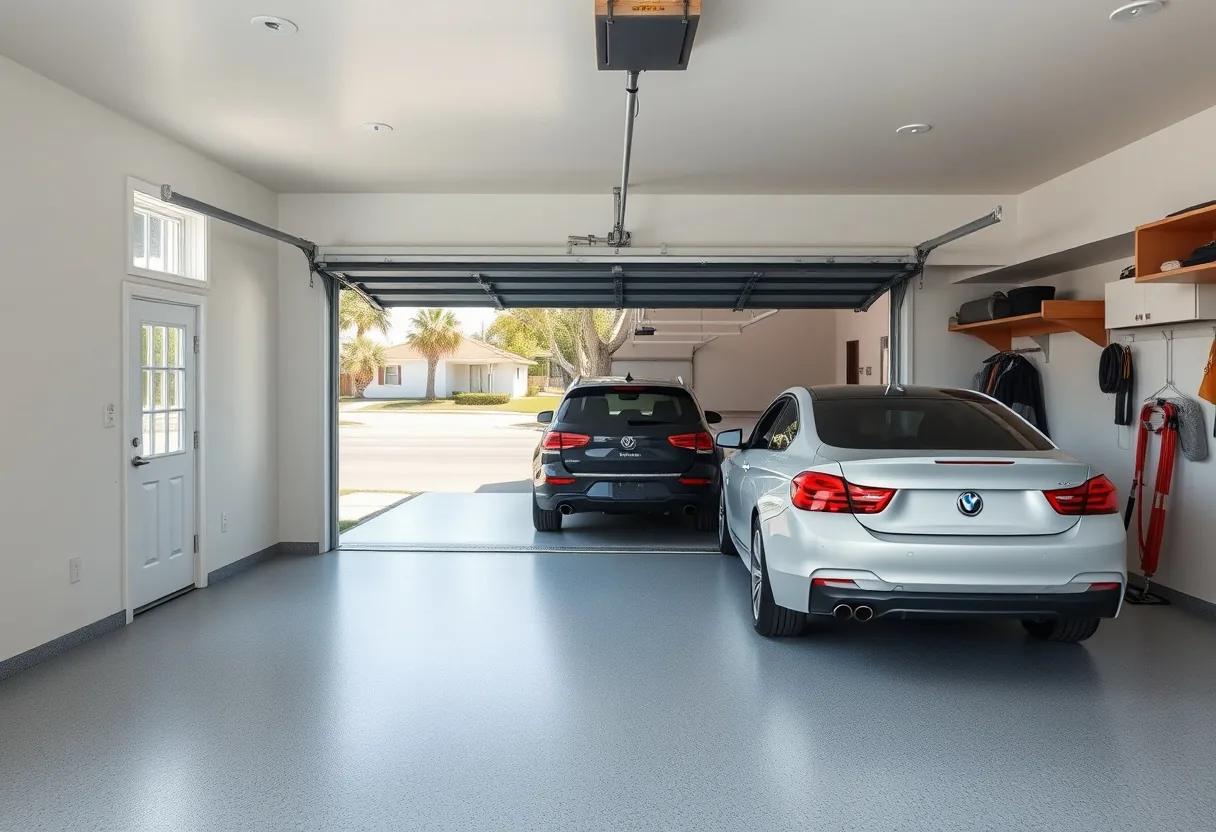
Here is how a typical two-to-three car [garage floor coating](/services/garage-floor-coating/) runs from arrival to a finished, walk-ready floor. Times shift with slab size and condition, but the sequence is always the same.
| Time | Step | What Happens |
|---|---|---|
| 8:00 AM | Arrival & prep | Crew clears the space, masks walls and thresholds, and moves anything left in the work area to the side. |
| 8:30 AM | Diamond grinding | Industrial diamond grinders open the concrete to a clean, profiled surface so the coating bonds mechanically — no peeling later. |
| 10:00 AM | Crack & joint repair | Cracks, chips, and control joints are cut, filled, and smoothed so the finished floor reads as one continuous surface. |
| 10:45 AM | Moisture check | The slab is tested for moisture coming up through the concrete, confirming it is dry enough to coat with confidence. |
| 11:15 AM | Basecoat | The pigmented polyaspartic basecoat is rolled and cut in across the whole floor as the color foundation. |
| 11:45 AM | Broadcast flakes | Decorative color flakes are hand-broadcast into the wet basecoat to full refusal for even, wall-to-wall color. |
| 2:00 PM | Scrape & vacuum | Once the base has set, loose flakes are scraped down flush and vacuumed away, leaving a smooth, uniform texture. |
| 3:00 PM | Clear topcoat | A clear polyaspartic topcoat is applied over the flakes, locking them in and creating the tough, glossy wear surface. |
| 4:00 PM | Cure & walkthrough | The floor kicks off its cure while the crew cleans up and walks the finished job with you. |
Return-to-Service: The Honest Numbers
This is where we set expectations straight, because a one-day install does not mean instant. It means the work finishes in a day and the floor cures on its own from there.
- Walk on it in hours — most floors are foot-traffic ready the same evening, typically within a few hours of the topcoat going down.
- Drive on it in about 24 hours — wait roughly a full day before rolling a vehicle back in, so hot tires and full weight land on a fully set surface.
- Heavy use in a few days — for dropped tools, dragged furniture, and worst-case abuse, give it a couple of extra days to reach full hardness.
Exact times flex with temperature and humidity, and your crew will give you the specific windows for your floor before they leave. The headline still holds: install in one day, walk that night, park the next day.
Why One Day Actually Matters
The one-day timeline is not just a bragging point — it is the difference between a project that disrupts your life and one that barely registers. For a homeowner, it means your garage is out of commission for a single day instead of a long weekend with cars stranded in the driveway and the space taped off for the better part of a week.
For Louisiana businesses, the math is even sharper. A shop, warehouse, showroom, or commercial kitchen can schedule the install over a weekend or after hours and reopen on a finished floor with no lost operating days. No shutdown, no rescheduled customers, no revenue left on the table waiting for a coating to cure between coats.
1-Day Polyaspartic vs Multi-Day Epoxy
Epoxy still has its place, but the trade-offs are real. A traditional [epoxy floor coating](/services/epoxy-floor-coatings/) usually needs multiple visits — a coat, a wait, another coat, another wait — because each layer cures slowly and is sensitive to temperature and moisture. That can stretch a garage into a two-, three-, or four-day affair, and the schedule slips further when the weather does not cooperate.
| Factor | 1-Day Polyaspartic | Multi-Day Epoxy |
|---|---|---|
| Install time | One day, start to finish | Two to four days across visits |
| Cure speed | Fast — multiple coats in one day | Slow — one coat per day, then wait |
| Weather tolerance | Cures in heat, humidity, and cold | Fussy in cold and high moisture |
| UV & yellowing | Holds color, resists yellowing | Can amber and chalk in sunlight |
| Downtime | Walk same night, drive in ~24 hrs | Days of taped-off, unusable floor |
For most residential garages and light-commercial floors, polyaspartic wins on both durability and downtime. Epoxy can still be the right call for certain budgets or specialty builds, and we are happy to walk you through where each one fits.
When a Job Honestly Needs More Than One Day
We will not oversell the timeline. Most floors finish in a day, but some genuinely should not be forced into one, and a good crew tells you that up front. The usual reasons a project extends past a single day:
- Major concrete repair — badly spalled, pitted, or broken slabs need real rebuilding and time to set before any coating goes down.
- Moisture mitigation — a slab pushing up too much moisture needs a mitigation step first, or the finished floor will not last.
- Very large areas — big commercial square footage simply takes more hands and, sometimes, more hours than one day allows.
If your slab needs that kind of groundwork, our [concrete repair & moisture mitigation](/services/concrete-repair-moisture-mitigation/) service handles it the right way. Adding a day here is not a delay — it is what protects the warranty and keeps the finished floor bonded and looking new for years.
Get Your One-Day Floor Scheduled
Most residential garages and many commercial floors across Louisiana are genuine one-day jobs — ground, coated, flaked, and sealed before the sun goes down, with the protection of a durable polyaspartic system built for our climate.
Want to know if your floor qualifies for a same-day install? Get a [free quote](/quote/) or call 844-967-5247 and we will give you an honest read on your slab and a real timeline. All numbers are estimates until we see your concrete.
Frequently Asked Questions
Yes. Because polyaspartic cures so quickly, a crew can grind the concrete, repair cracks, lay the basecoat, broadcast the flakes, and seal it with a clear topcoat all in a single day. The fast chemistry is what allows multiple coats in one visit, so a typical two-to-three car garage is finished from morning to evening.
Polyaspartic has a wide temperature and humidity cure window, which is exactly why it suits our climate. It keeps curing predictably in summer heat, thick humidity, and a winter cold snap. That tolerance is what makes a reliable one-day schedule possible here, where slow, moisture-sensitive epoxy often stalls between coats.
Most floors are ready for foot traffic the same evening, usually within a few hours of the final topcoat. Wait about 24 hours before driving a vehicle back in so hot tires and full weight land on a fully set surface. For heavy use and dragged loads, give it a couple of extra days to reach full hardness.
Epoxy cures slowly and is sensitive to cold and moisture, so it usually needs several visits with waits between coats, stretching a garage into a multi-day project. Polyaspartic installs in one day, resists yellowing in sunlight, and returns to service far faster. For most garages and light-commercial floors, that means better durability with a fraction of the downtime.
A few things honestly need extra time: major concrete repair on badly spalled or broken slabs, moisture mitigation when a slab pushes up too much moisture, and very large commercial areas. In those cases our concrete repair and moisture mitigation work comes first. That added day protects the warranty and keeps the finished floor bonded for years.
Absolutely. Because the whole job finishes in one day, Louisiana businesses can schedule the install over a weekend or after hours and reopen on a finished floor with no lost operating days. There is no multi-day shutdown and no floor taped off for a week, so your operation keeps running while your new surface cures.