The Short Answer for Louisiana Homeowners
If you are comparing garage floor coatings in Louisiana, the humidity changes the math. In a dry climate, a well-installed epoxy floor can last years. Here in south Louisiana — where the dew point sits in the 70s for months, slabs pull moisture up from saturated soil, and flood-prone concrete is a fact of life — the coating that survives is the one that tolerates moisture and stays flexible. That is where polyurea and its UV-stable cousin polyaspartic pull ahead of traditional epoxy.
This guide breaks down all three materials honestly: what they are, how they behave in the heat and moisture, what they cost per square foot in 2026, and which system makes sense for a garage, a pool deck, a warehouse, or a food-processing plant. No sales fog — just the trade-offs, so you spend once instead of twice.
The Louisiana dealbreaker in one line
Epoxy is moisture-sensitive while it cures. On a humid or flood-prone Louisiana slab, that is exactly when it fails — bubbling, peeling, and delaminating months later. Polyaspartic and polyurea cure fast and shrug off the moisture that wrecks epoxy.
Three Materials, Constantly Confused
Most of the confusion in this business comes from three product families being sold under a dozen marketing names. Let us define them cleanly, because the differences decide how your floor holds up.
Epoxy is a rigid thermoset. Two parts — a resin and a hardener — react into a hard, thick build coat that bonds to concrete and creates that classic showroom shell. It builds film thickness well and is inexpensive, but it is brittle, sensitive to moisture during cure, and it ambers (yellows) under UV light. Epoxy is a build coat, not a finish coat.
Polyurea is a fast-reacting, highly flexible, extremely tough coating chemistry. It cures in minutes to hours instead of days, stays flexible enough to move with the slab through Louisiana heat cycles, and resists abrasion and chemicals far better than epoxy. It is the workhorse for demanding floors.
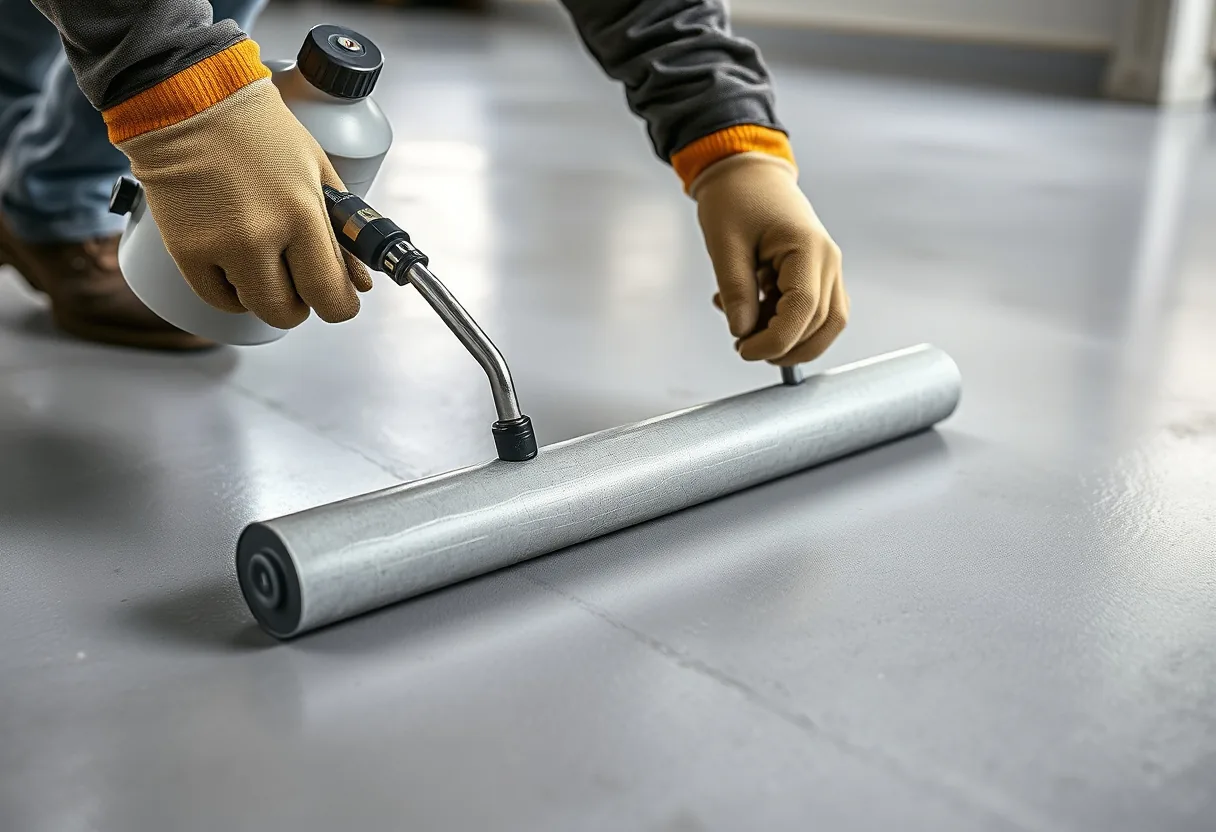
Polyaspartic is a specific type of polyurea engineered to be UV-stable and to go down as a clear topcoat. It will not yellow in sunlight, it cures fast, and it is the reason a professional crew can install a full flake floor in a single day. When you hear about polyaspartic 1-day systems, this is the chemistry doing the work.
Polyaspartic IS polyurea
Do not let a salesperson pit polyaspartic against polyurea as if they are rivals. Polyaspartic is a UV-stable member of the polyurea family, usually used as the clear topcoat over a colored base or flake broadcast. The real comparison is polyurea-family systems versus traditional epoxy.
Head-to-Head: Polyurea / Polyaspartic vs Epoxy
Here is the direct comparison that matters. Read the moisture-tolerance and UV rows twice — those two lines are why so many Louisiana epoxy floors get torn out and recoated within a few years.
| Property | Epoxy (build coat) | Polyurea / Polyaspartic |
|---|---|---|
| Cure time | 12-24 hrs per coat; multi-day install | Minutes to a few hours; 1-day install possible |
| UV stability | Ambers and yellows in sunlight | UV-stable, stays clear (polyaspartic) |
| Flexibility | Rigid, brittle, cracks with slab movement | Flexible, moves with the concrete |
| Abrasion resistance | Good | Excellent — noticeably tougher |
| Chemical resistance | Good vs many chemicals | Superior vs oils, salts, and solvents |
| Hot-tire pickup | Prone to lifting under hot tires | Resists hot-tire pickup |
| Moisture tolerance | Low — sensitive during cure, peels on damp slabs | High — far more forgiving of slab moisture |
| Install time | 3-5 days including cure windows | Often a single day, ready to drive on sooner |
| Typical lifespan (LA) | A few years if the slab stays dry | 15-20+ years with a proper install |
Notice this is not a case of one product being all good and the other all bad. Epoxy is a genuinely excellent base — it builds thickness and bonds beautifully. The problem is using it as a standalone finish in a hot, humid, UV-heavy environment. The strongest floors, as you will see below, actually use both.
The hot-tire row deserves a note of its own, because it is the failure Louisiana homeowners notice first. When you pull into a garage after a summer drive, your tires are hot and loaded with weight. A rigid coating like epoxy softens slightly at that contact patch and the tire literally lifts patches of it off the slab as you back out days later — that is hot-tire pickup. Flexible polyurea and polyaspartic move with the surface instead of releasing from it, so the finish stays put through July and August heat that regularly bakes a closed garage past 100 degrees.
The Louisiana Humidity and Moisture Problem
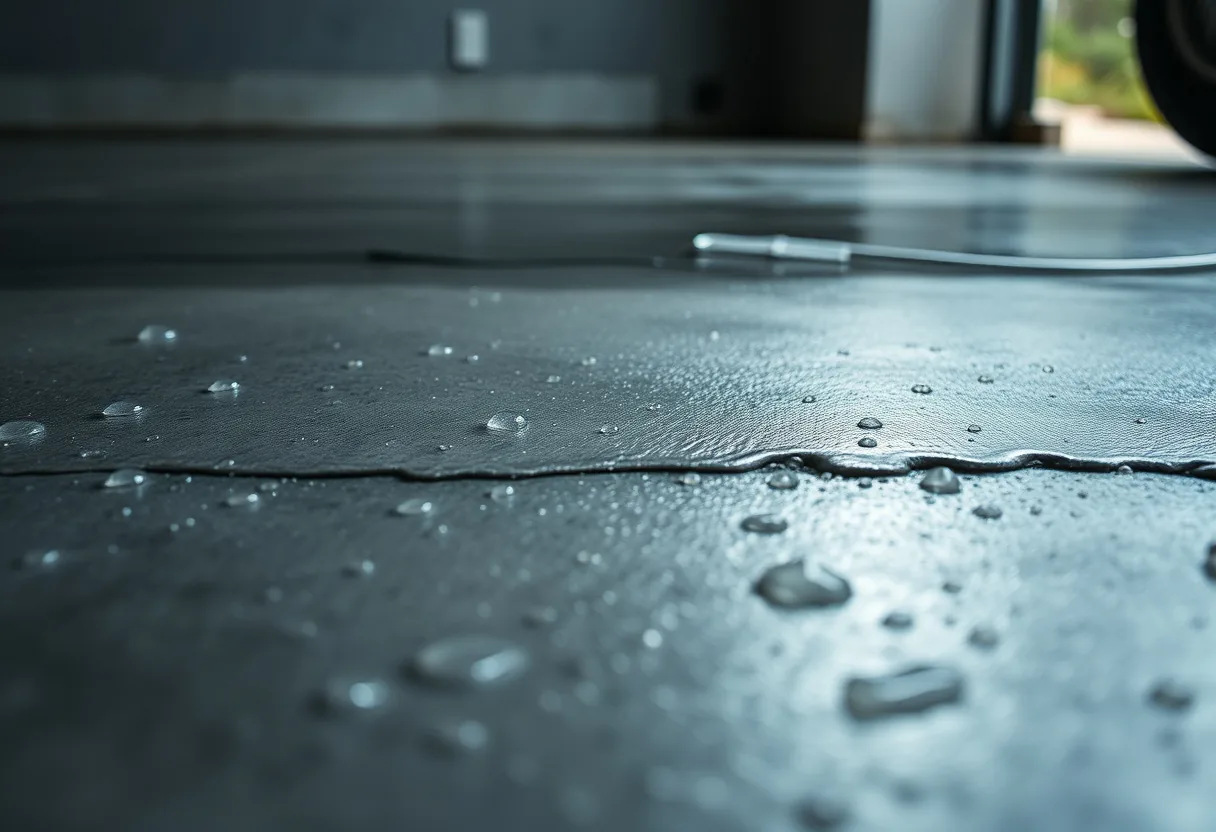
This is the single most important section in this guide, and it is the one most out-of-state price comparisons ignore entirely. Concrete is porous. Water in the soil beneath your slab is constantly trying to move upward and evaporate through the surface — a process called moisture vapor transmission (MVT). In arid states that vapor is a trickle. In Louisiana, with high water tables, saturated ground, and flood-prone lots, it can be a steady push of moisture right up through the concrete.
Epoxy hates this. While epoxy cures, moisture pushing up from below disrupts the bond between the coating and the concrete. Months later the floor blisters, bubbles, and peels — a failure called osmotic blistering or delamination. Homeowners blame the product; the real culprit is a wet slab that was never tested or mitigated. On a flood-prone or slab-on-grade Louisiana home, this is not a rare edge case. It is the default risk.
- Moisture testing is non-negotiable. A calcium chloride or relative-humidity probe test tells us how much vapor your slab is actually pushing before a drop of coating goes down.
- Diamond grinding, not acid etching. Mechanical diamond grinding opens the concrete profile for a real mechanical bond. Acid etching — common in DIY kits and cut-rate crews — is unreliable and a frequent cause of Louisiana coating failures.
- Moisture mitigation when the numbers demand it. When a slab tests wet, a dedicated vapor-barrier primer is applied first. Skipping this to save money is the fastest way to a floor that peels within a year.
Polyurea-family systems are considerably more forgiving of slab moisture than epoxy, which is a large part of why they have taken over the Gulf Coast market. But forgiving is not invincible. On any slab — no matter the coating — proper prep plus moisture testing and mitigation is what separates a 20-year floor from a callback. If an installer does not mention moisture testing in Louisiana, that tells you everything.
2026 Cost in Louisiana: What You Actually Pay
Let us talk real numbers. All figures below are 2026 estimate ranges for Louisiana and will vary with slab condition, prep required, moisture mitigation, colors, and square footage. The single most important idea in this section: the cheapest option up front is almost never the cheapest over ten years.
| System | Estimated cost / sq ft | What you are getting |
|---|---|---|
| DIY epoxy kit (big-box) | $1 - $2 | Thin, short-lived, acid-etch prep; often peels within 1-3 years on humid slabs |
| Professional epoxy | $3 - $7 | Proper prep and thicker build, but still ambers and is moisture-sensitive |
| Pro polyaspartic / polyurea flake | $5 - $12 | Ground prep, flexible UV-stable system, 1-day install, 15-20+ year life |
| Epoxy base + polyaspartic topcoat | $7 - $12 | Best of both — thick bonded base, tough UV-stable finish |
The DIY line is where most regret starts. A $60 big-box kit spread over a 2-car garage looks like a bargain until it lifts off with the first hot tire in July or bubbles after the first heavy rain floods the slab. You then pay a professional to grind off the failed coating plus install a real floor — the classic pay-twice trap.
Cost also scales with the job, but not linearly — mobilization, prep, and setup are close to fixed, so larger floors cost less per square foot. Here is a rough Louisiana sizing guide for a professional polyaspartic flake system:
| Project size | Approx. square footage | Estimated project range |
|---|---|---|
| 1-car garage | ~250 sq ft | $2,000 - $3,500 |
| 2-car garage | ~400-500 sq ft | $3,000 - $6,000 |
| 3-car garage | ~600-750 sq ft | $4,500 - $8,500 |
| Commercial / warehouse bay | 2,000+ sq ft | $5 - $10 / sq ft (volume pricing) |
Ten-year math
A $1,500 DIY epoxy floor that fails twice and finally gets a $5,000 professional system installed costs you roughly $8,000. The $5,000 polyaspartic floor done right the first time and left alone costs $5,000. Cheap is expensive when the slab is humid.
Which System to Choose by Use
The right coating depends on what the floor has to survive. Sunlight, standing water, forklift traffic, and food-safety washdowns all point to different answers. Here is our Louisiana recommendation by application.
| Where | Recommended system | Why |
|---|---|---|
| Home garage | Polyaspartic flake, or epoxy base + polyaspartic top | Hot-tire resistance, 1-day install, no yellowing |
| Patio / pool deck | UV-stable polyaspartic (often textured for slip resistance) | Full sun, standing water, and bare feet demand UV stability and grip |
| Commercial / warehouse | Polyurea or epoxy base + polyurea top | Abrasion and forklift traffic need the toughest chemistry |
| Industrial / food processing | Polyurea / polyaspartic, seamless and sanitary | Chemical resistance, thermal-shock washdowns, easy sanitation |
| Metallic / decorative | Metallic epoxy base + clear polyaspartic top | Depth of the metallic look, protected by a UV-stable finish |
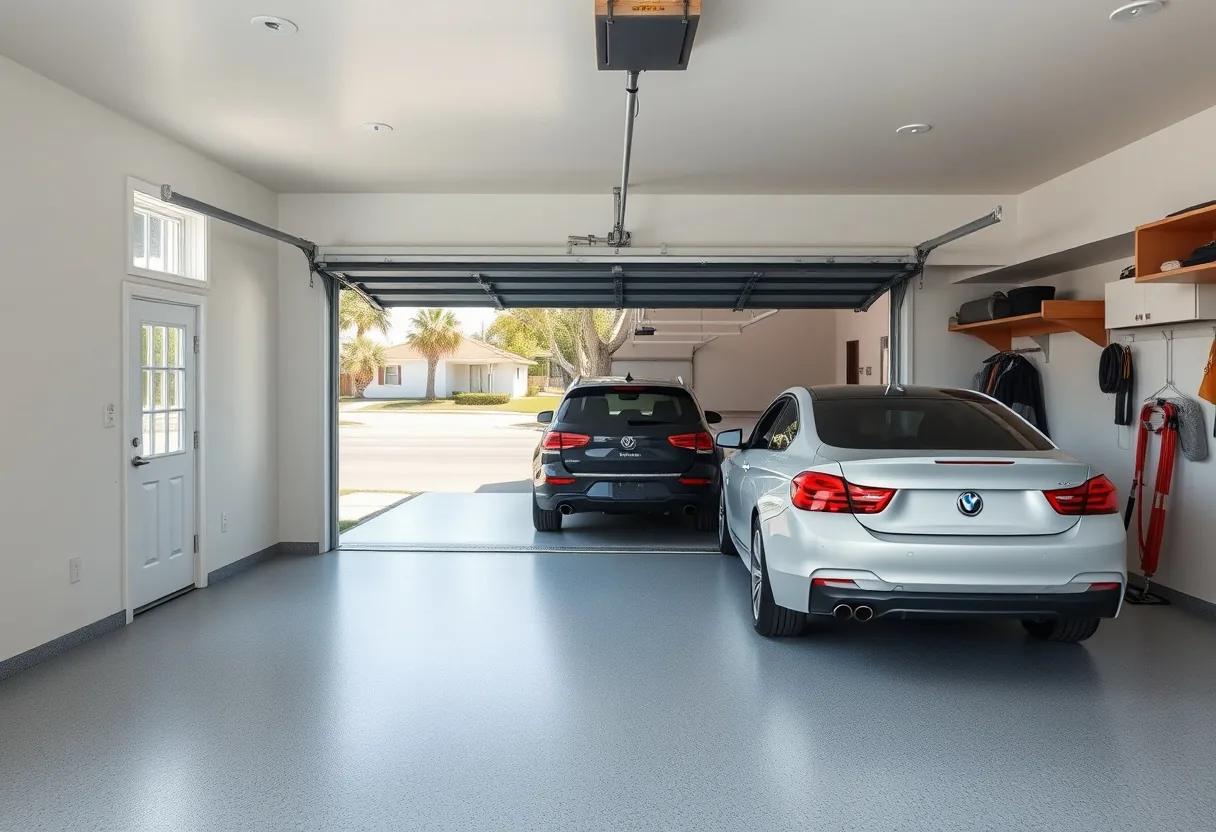
- Garages — a garage floor coating in flake polyaspartic is the sweet spot for most Louisiana homeowners: tough, non-yellowing, installed in a day.
- Patios and pool decks — patio and pool deck coatings live in full sun and standing water, so UV stability and slip texture are the whole game.
- Warehouses — commercial and warehouse floors take forklift and pallet-jack abuse that only polyurea toughness handles long term.
- Food and industrial — industrial and food-processing floors need seamless, sanitary, chemical-resistant surfaces that survive hot washdowns.
- Decorative — metallic flake floors use a metallic epoxy for depth, sealed under clear polyaspartic so the shine never yellows.
The Best-of-Both System: Epoxy Base + Polyaspartic Topcoat
You do not have to choose a single chemistry. The most durable high-end floors we install combine them: a bonded base to build thickness and lock into ground concrete, then a UV-stable polyaspartic topcoat to deliver the toughness, clarity, and chemical resistance the surface actually needs.
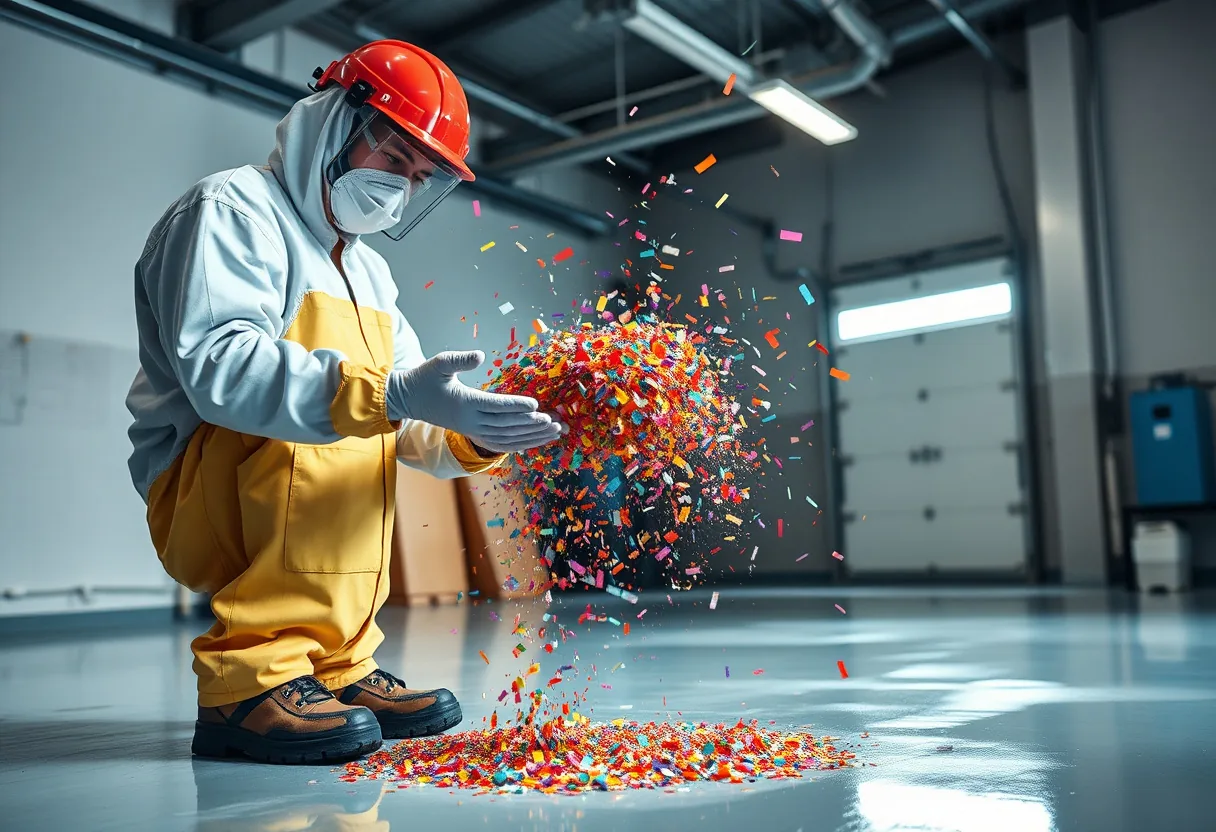
The base coat (often epoxy or a colored polyurea) does what it does best — bond and build. Color flakes are broadcast into it. The polyaspartic topcoat then seals everything under a hard, flexible, non-yellowing shell that resists hot tires, abrasion, and chemicals. You get epoxy build economics on the bottom and polyurea performance on top. In Louisiana, this hybrid is frequently the best value per year of service life.
One caution: the hybrid only works when the slab underneath is dry enough for the epoxy base to bond, so moisture testing still governs the whole decision. If your slab tests wet, we either lead with a vapor-barrier primer or move to an all-polyurea buildup that tolerates the moisture. This is exactly why a good installer inspects and tests before recommending a system rather than quoting a one-size-fits-all package over the phone.
How to Vet a Louisiana Floor Coating Installer
The product matters less than the person installing it. A top-tier coating over bad prep still fails. In a humid, flood-prone market, prep discipline is everything, so screen your installer on process, not just price.
- They diamond grind — they do not acid etch. Ask directly. Mechanical grinding is the only reliable profile for a lasting bond. Acid etching is a red flag in Louisiana.
- They test for moisture. A serious installer measures slab moisture before quoting a final price and explains what happens if the numbers come back wet.
- They offer real moisture mitigation. If your slab tests damp, they should have a vapor-barrier primer plan — not a shrug and a promise.
- They back it with a real warranty. A written multi-year warranty on materials and workmanship signals confidence. A DIY kit has no warranty at all.
- They install a system, not a kit. Ask what products go down, in what order, and how long they last. Vague answers mean a vague floor.
The two-question filter
Ask any installer just two things: Do you diamond grind or acid etch? and Do you moisture-test the slab before you quote? The right answers are grind and yes. Anyone who dodges those in Louisiana should not be coating your floor.
Get a Straight Answer on Your Floor
Every slab is different, and the honest way to price a floor is to look at yours — its size, its condition, and how much moisture it is pushing. We install polyaspartic and polyurea systems across Louisiana, from single-car garages to full warehouse bays, and we test and prep every slab the way this climate demands.
Ready for real numbers on your space? Request a free quote or call 844-967-5247 and tell us what you are working with — a garage, a pool deck, a shop floor, or a food-processing plant. We will tell you which system fits, what it costs, and what your slab needs before anything goes down. For a fast one-day option, ask about our polyaspartic 1-day systems.
Frequently Asked Questions
For most Louisiana garages, yes. Polyurea and polyaspartic stay flexible, resist hot-tire pickup, do not yellow in sunlight, and tolerate the slab moisture that makes epoxy peel here. Epoxy still makes an excellent base coat, which is why many high-end floors pair an epoxy base with a polyaspartic topcoat rather than choosing just one.
Louisiana slabs push a lot of moisture vapor up from saturated, flood-prone soil. Epoxy is sensitive to that moisture while it cures, so the bond fails and the floor later blisters, bubbles, and peels. In drier climates the vapor is minimal, so epoxy survives. Proper moisture testing and mitigation before coating is what prevents this failure.
A professional polyaspartic flake system on a typical 400 to 500 square foot two-car garage generally runs about $3,000 to $6,000, depending on slab condition, required prep, moisture mitigation, and color choices. DIY epoxy kits cost far less up front but often fail within a few years on humid slabs, so they frequently end up costing more overall.
Polyaspartic is a type of polyurea. Polyurea is the broad family of fast-curing, flexible, tough coatings. Polyaspartic is a UV-stable version engineered to go down as a clear topcoat that will not yellow in sunlight. In a flake floor, a colored base is broadcast with flakes and then sealed under a clear polyaspartic top. They work together, not against each other.
Yes. Because polyaspartic cures in minutes to a few hours instead of the days epoxy needs, a professional crew can grind, base coat, broadcast flake, and apply the topcoat in a single day, with the floor ready to walk on that evening and drive on within about a day. Traditional multi-coat epoxy systems typically require three to five days including cure windows.
In Louisiana, yes. Slab moisture is the number one cause of coating failure in this region, and you cannot judge it by eye. A quick calcium chloride or relative-humidity test tells us how much vapor your concrete is pushing so we can add a vapor-barrier primer if needed. Skipping this step is the fastest route to a floor that peels within a year.
Rarely in Louisiana. Big-box kits are thin, rely on acid etching instead of diamond grinding, and are highly moisture-sensitive, so on our humid, flood-prone slabs they often bubble or peel within one to three years. You then pay a professional to grind off the failure and install a real system, which costs more than doing it right the first time.
A properly installed polyurea or polyaspartic system with correct diamond grinding, moisture testing, and any needed mitigation can last 15 to 20 years or more in a Louisiana garage. Lifespan depends far more on slab prep and moisture control than on the coating brand, which is why vetting the installer matters as much as choosing the product.